
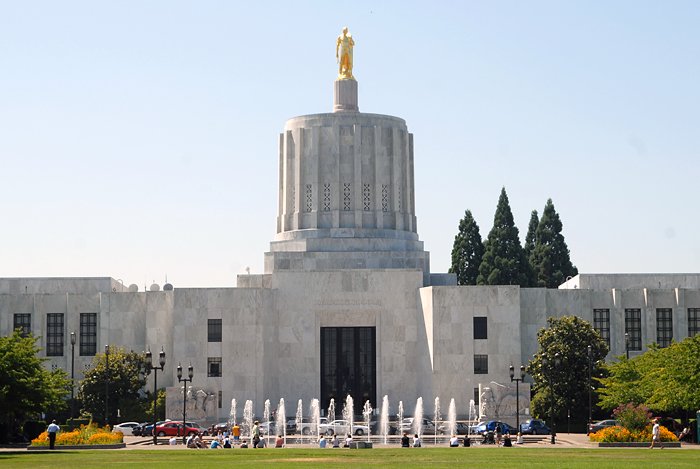
Over the course of 35 days that made up the 2026 short Session, several of our member organizations played key roles in advancing legislative wins that will keep our communities and families safer, make our state budget more resilient amidst federal headwinds, and deliver important progress on issues that matter deeply across our communities.
We are proud to lift up these victories that were a part of broader efforts across Oregon communities, organizations, and movement spaces. These wins reflect the power of the community and we are thankful for the leadership that advanced important legislative priorities to create a stronger, safer, more equitable future for all Oregonians.
Legislative Wins:
Immigrants Rights Package
As we see increased attacks and violence toward our immigrant and refugee neighbors and communities, the Oregon Legislature voted and passed a series of bills aimed at creating new protections to keep all of us safer. Here’s what passed:
House Bill 4114 - Oregonians would be able to sue “a person” over Fourth Amendment violations, and prevailing plaintiffs would be entitled to an award of attorney’s fees
House Bill 4111 - data about a party's or a witness's immigration status may not be used in a civil case
House Bill 4128 - restricts law enforcement from wearing face coverings
SB 1587 - protect immigrants’ information sold or transferred to third-party data brokers that could be used for immigration enforcement.
HB 4079 - require public schools to alert staff, students and parents when there is confirmation that immigration authorities are on school campuses
SB 1570 - establishes boundaries for hospitals to share information related to immigration status of patients
See full Immigrants Right Package here.
Many of our member organizations endorsed or supported policies within the Immigrant Rights Package including Latino Network, APANO, Verde, Urban League, SEI and NAYA.
SB 1507 - Tax Disconnect
What is it?
Disconnects from aspects of HR 1, also known as Trump’s Big Beautiful Bill. Namely, SB 1507 selectively removes two federal tax cuts on businesses and one on auto loan interest paid.
Why does it matter?
Oregon is one of the few states that automatically ties its tax code to the federal tax code. Ahead of the 2026 Legislative Session, Oregon was facing a $63 million deficit due to the impacts and tax breaks of HR 1. By selectively disconnecting, Oregon will now preserve a net $291 million in tax revenue. This means that Oregon will be able to continue funding for schools, health care, and community services.
Supported by: APANO, SEI
HB 4057 - ODHS Referral for Families on Programs
What is it?
Requires the Oregon Department of Human Services to proactively share information about early learning programs with families they serve. It ensures families don’t miss out on critical early education opportunities simply because they weren’t told.
Why does it matter?
Folks are only able to access the programs that they know about. Low income families, immigrant and refugee families, and others may not be able to access the same information as others. Because of this, they may often miss out on early learning opportunities for their children. This ensures that families know of these opportunities and know how to enroll in them.
Supported by: APANO
SB 1546 - AI Chatbots
What is it?
This bill requires AI companions to clearly tell users they are interacting with software, and to have safeguards that detect and prevent content that could lead to suicide or self-harm. It adds extra protections for minors, requires annual reporting to the Oregon Health Authority, and allows users to sue if harmed by violations.
Why does it matter?
With the rise of AI usage across the US, there have been an increasing number of instances of AI psychosis - the development of worsening of delusions, paranoia, and a detachment from reality caused by intense, prolonged interaction with AI chatbots. There have been cases in the US where minors have died by suicide due to AI psychosis and with the help from AI chatbots. This bill helps protect folks from the harm that can be caused by AI.
Supported by: APANO
HB 4036 - Preserve Affordable Homes for Oregon Fund
What is it?
Declares an emergency and establishes the Preserve Affordable Homes for Oregon fund to acquire and rehabilitate affordable housing at risk of loss, including properties with expiring federal rent assistance contracts and manufactured dwelling parks at risk of conversion.
Why does it matter?
Nearly 8,000 affordable homes across Oregon face loss of affordability in the coming decade. Preserving affordable housing is essential to preventing further displacement of BIPOC and Native communities.
Supported by: NAYA
SB 1523 - Tenant Portal Opt-Out
What is it?
Defines electronic rental portals and allows tenants and applicants to opt out, requires landlords to offer non-electronic alternatives for applications, rent payments, and common-area access, and limits electronic-only payment requirements.
Why does it matter?
Electronic-only rental platforms create barriers for elders, people with limited English proficiency, and those without internet access.
Supported by: NAYA, Urban League
SB 1547 Behavioral Health and Wellness Practitioner License
What is it?
Establishes a bachelor’s-level license for Behavioral Health and Wellness Practitioners, creating a new pipeline into the behavioral health workforce.
Why does it matter?
Oregon is facing a severe behavioral health workforce shortage. Creating a bachelor’s-level license pathway reduces barriers to entry for providers.
Supported by: NAYA
HB 4123 - Landlord Confidentiality
What is it?
Provides privacy protections needed in housing. Allowing tenants confidence that their private information is secure and landlords’ legal clarity to protect them from liability.
Why does it matter?
Adds a clear and simple provision to Oregon’s Landlord Tenant law, specifying that certain personally identifying, financially sensitive, and other private information may not be disclosed without the written consent of the tenant, unless in response to a court order.
Supported by: Urban League
HB 4089 - Strengthening Oregon’s Wage Theft Protections
What is it?
Expands the definition of wage theft to capture current employer abuses and evasion tactics.
Why does it matter?
The loss of wages disproportionately harm working families. Adding further protections and definitions can help families thrive and get the dues that they are owed.
Supported by: Urban League